What’s the probability you have interacted with at least one mathematical idea today? I’m going to be bold here and say I believe it’s 100%. I do not think there is any chance you have not engaged in some kind of thinking that relates to math. If you think otherwise, I’d love to have a conversation about it. Make sure to leave a comment below or send me your thoughts over on Instagram.
{This is a modified transcript for Episode 39 of the I See Math People podcast. To listen instead, click here.}
Today’s discussion is brought to you by the letter P and in it we’ll discuss only a very few of the mathematical ideas that begin with that letter. I say very few, because there are a LOT of math related words that start with P. It was a little tricky to narrow down the list to a suitable size for one post, but I did it.
And my list contains my very favorite idea…the one I think describes the entire world of math and I would be willing to bet you interact with this idea every single day. Can you guess what it is?
Percent
Percent is one mathematical idea that begins with P. No, it’s not my favorite, but I start with it because you are very familiar with it. Percent means out of 100…it’s right there in the word if you separate it out…per, meaning for each, and cent, meaning one hundred.
Percents are often written with that little percent symbol after. You know the one, right? It kind of looks like a fraction with zeros in the top and bottom. At your favorite store, you might see a sign saying a certain section is 25% off. Or a clearance rack that says 80% off. You see percentages in other places, too. How about the grade on your child’s last math test. Grades are often converted to the number of points out of 100, but teachers don’t usually include the percent sign when they communicate your score. At least, I don’t think I ever did.
You also encounter percents when you pay sales tax on purchases and with interest rates on bank accounts and loans.
The next time you notice a percent in any context, take a moment and recognize this interaction makes you a math person.
Probability
P is also for probability and it is also not my favorite math word. We will get there, I promise!
While there are lots of different ways to calculate mathematical probabilities based on the specific situation, in general, probability is known as the chance that something will happen and in the simplest terms it’s the number of possible successes divided by the number of possible outcomes. Let’s use the example of flipping a coin.
What is the probability of a flipped coin landing heads up?
You already know the answer, but here’s a quick explanation of why. Since a coin only has two sides, it will either land on heads or tails. There are no other possibilities. There is only one outcome that matches what we want…to land heads up. So, the probability the coin will land on heads is 1 out of 2, or 1 ÷ 2. This is usually expressed as a fraction, in this case ½, or as a percent, here ½ = 50%.
Scenarios get complicated pretty quickly, but that’s the basic idea.
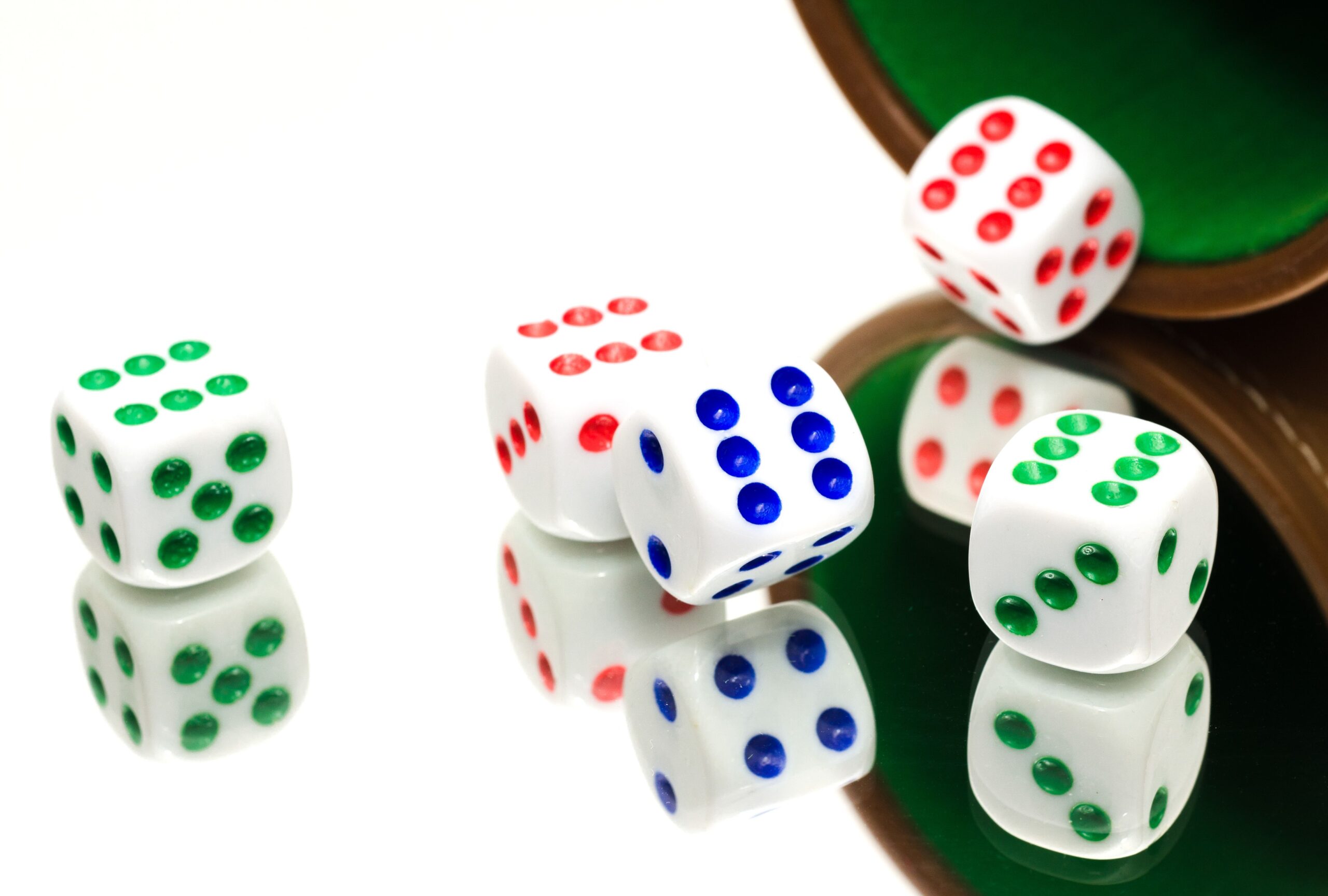
So, when do you interact with this idea? I don’t know that I regularly calculate probabilities, and you probably don’t either, but if you’ve ever played a game involving dice or spinners or cards, you’ve likely thought about the probability of getting what you need or want when taking your turn. You’ve also looked at the weather app on your phone to see how likely it is you’ll get rained on when you go to your child’s soccer game this weekend.
These are just a couple of scenarios where you might encounter the idea of probability in your daily life. No matter when or where you think about the chances of something happening, doing so definitely makes you a math person.
Pie Charts
Probabilities and percentages are sometimes displayed using another P word, pie chart. You remember those, right? Pie charts are circles that have been divided into different sized wedges that look like pieces of pie and visually show information about a data set. Each section shows the portion of the whole circle represented by a certain category.
Your investment account statement probably uses a pie chart to show which types of investments make up your balance. My mortgage statement uses a pie chart to show the portion of the payments I’ve made this year that have gone to the principal, the balance and to escrow. You might see pie charts in other scenarios, too. Like in survey or voting results.
You know exactly what I’m going to say next. Interacting with pie charts makes you a math person.
And now, the moment you’ve been waiting for…I’ve saved my favorite mathematical idea beginning with P for last. Have you guessed it yet?
Way back in episode 2, called Math in One Word, I claimed that I could describe the entire subject of mathematics in a single word. I stand by that claim and the word? Well, it’s…
Patterns
Does your brain seek patterns like mine does? I think that’s one reason I always enjoyed math class and why I eventually became a math teacher. No matter the concept, learning it and truly understanding it involves identifying a pattern.
Counting is a pattern.
Addition and subtraction and multiplication and division are patterns.
Fractions are patterns.
Geometry, graphing, algebra…all patterns.
And there’s more. Beyond mathematical patterns like those, you interact with all sorts of patterns every day. Of course there are visual patterns, what most people think of when they hear the word. Like the stripes on the referee’s uniform or the logo of your favorite coffee shop. Patterns allow you to recognize buildings as houses and schools and churches. Routines are behavior patterns. Basketball and football plays and choreographed dances are patterns of movement. You recognize your favorite song by the pattern of the notes being played. Your thoughts form patterns.
I could go on and on and on. But, I’ll stop here and reiterate…because repetition is what does it, you know…the next time you notice or create a pattern, take a minute to acknowledge that this makes you a math person.
And if you are as intrigued by the idea of patterns as I am, check out this post or listen to episode 2 and then send me a message with your thoughts because I would love nothing more than to continue this conversation with you.
I’m so grateful you joined the conversation today! I’m on a mission to change the way the world sees math, and this begins with you. If you found value in this post, if something you read made you pause, or if you suddenly realized the hidden math in something you do every day, now is the time to join this movement!
When you comment here and share this site, or when you subscribe to, rate, and share the I See Math People podcast, the algorithms will show it to more people and the more people who get the message, the more mindsets can begin to shift. That is exactly how movements gain momentum!
Thank you for being part of this discussion of a few of the mathematical concepts beginning with the letter P. I truly hope you heard something about percent, probability, pie charts, and pattern you can relate to and that it makes you stop and think about where math shows up for you on a daily basis. Noticing where you interact with math is the first step to beginning your mindset shift and seeing yourself as the math person you really are.
I’m Jennifer Mason Hardin and everywhere I look I see math people just like you.