I’m wondering where you’ve interacted with mathematical thinking today. When I asked this question on Instagram, I had some folks reply they didn’t. When I reminded them that interacting with a math idea does not necessarily mean “doing math” like we associate with math class, they were able to see they actually had interacted with mathematical thinking that day.
{This is a modified transcript for Episode 43 of the I See Math People podcast. To listen instead, click here.}
And that is the whole point of the I See Math People Podcast…and these companion posts here. To show you where you interact with math on a daily basis.
Why is this important? Because in order for your mindset about your status as a math person to shift, you have to notice where you are using mathematical thinking.
And why is this shift important for you? Because whether you realize it or not, your ideas about what it takes to be a math person are influencing your life choices. I want you to live your dream and I don’t want your belief that you are not a math person to be the thing that keeps you from that dream. Do you?
So, I’ll ask again. Where have you interacted with a mathematical idea today? I’d love to hear your thoughts in the comments or in my Instagram messages.
So what do you say we continue this Mathabet journey with some mathematical ideas beginning with the letter O.
Ordinals
First up is what it means when I use the word “first.” An ordinal number is used to describe the position of something. As one example, if you are number 3 in the lineup, you bat third.
Where do ordinals show up in daily life? Everywhere. Humans are obsessed with ordinals. We race to be first in line or first finish a race of any kind. We get into heated debates over who will finish first in the sports tournament or in the voting polls. We don’t want to be the last in our social group or family to know about something or last to be picked for the kickball game. We say things like “first do your homework, then you can play” and “first things first.”
So, the next time you find yourself using words like, first, second, or third, stop and recognize you are using ordinal numbers and that this makes you a math person.
Order
Let’s shift our discussion to a related topic…order or ordering. Using ordinals tells the position of something when a group of things is put in order by some characteristic.
You’ve put numbers in order before, from least to greatest or greatest to least. You’ve put books on the shelf in order from shortest to tallest or thickest to thinnest. You’ve arranged clothing in your closet from lightest to darkest in color or from shortest to longest in length. You’ve even put your files in alphabetical order. There are all sorts of ways to order things and you do this more often than you think.
That makes you a math person.
Opposites
When my older son was small, he was looking out the car window and made an observation about a power pole. He said something about “at the down of it.” He couldn’t remember or didn’t know the word bottom, so he used a word that meant something similar. He understood up and down were opposites, and that is the next mathematical idea on my list for today.
It’s difficult to define the word opposite without using the word opposite. It’s just one of those concepts that’s so ingrained in us that we just know what it means.
Essentially, opposite means very different, but it’s more than that. A light bulb can’t be both on and off at the same time. The coin either lands on heads or it lands on tails. It can’t land on both at the same time. At that stop sign up ahead, you can’t turn both left and right at the same time.
You interact with and think about opposites in all sorts of contexts and I’m saying this makes you a math person.
Are you wondering how? Well, for one, understanding opposites involves comparison and comparing is a mathematical skill no matter the context.
{If you’d like to hear more about comparison, something you do every day, you might be interested in listening to Episode 12. Or read the post, Math is Comparison.}
Odds
What are the odds that coin I mentioned earlier will land heads up?
Odds are a way to describe the probability of something happening and are usually written as a ratio where the first number describes how many ways there are to be successful and the second number describes the number of ways to not be successful.
So, for example, the odds of it being January when you are reading this post are 1:11 because there’s one month called January and eleven months that are not January. And, the odds of that coin landing heads up are 1:1. There’s one way to land on heads and one way to not land on heads.
Unless you are in the habit of gambling or sports betting, you might not think about odds in this way regularly. But, I’m sure you’ve used phrases like “odds are…” and “against all odds.” When you use these, you are describing how likely it is something will happen. And thinking like that makes you a math person.
Odd Numbers
We already talked about even numbers back in this post. They are numbers whose quantities can be divided into two equal groups.
The opposite of even is odd, numbers that cannot be divided into two equal groups. When you try to divide an odd quantity into two equal groups, you will always have one left over..the odd man out, so to speak. We typically learn that numbers whose last digit is 1, 3, 5, 7, or 9 are odd.
Odd numbers are everywhere and I know you use them and think about them way more than you realize.
Optimization
Let’s talk about optimization. That’s a big word that means the best possible outcome for whatever it is you are trying to do. Sure, there are fancy formulas and methods in advanced math classes that do this, but that isn’t the context that really matters here.
Finding the fastest route to work is optimizing your drive time. Searching for the best deal is optimizing your spending. Anytime you change your routine to get better sleep or reorganize a closet to be able to find what you need more easily, you are looking for the best possible outcome. You are optimizing some area of your life.
And that process of noticing something isn’t working quite the way you want it to and figuring out how to improve makes you a math person.
Outlier
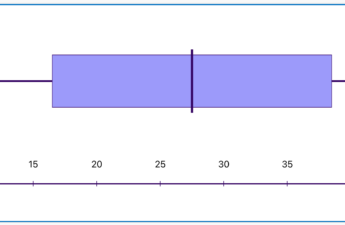
The final word on my list today is outlier. There’s a fancy statistical formula and definition from math class, of course, but put simply, an outlier is a data point that is much larger or smaller than most of the other values in the set.
So, that one kid in the youth basketball league who is a head taller than everyone else…he’s an outlier. And so is that million dollar home in your neighborhood, when all the rest of the houses are valued around two hundred thousand. That’s one reason you often hear about the median home prices instead of average home prices. That one outlier has a bigger influence on the average than on the median.
In your daily life, you might not encounter outliers frequently, but you do notice them. Outside of the sports example, you notice when it’s been in the 60’s for days and then a random Tuesday comes along at 100 degrees outside. You also use phrases like “odd man out,” “stick out like a sore thumb,” “black sheep,” and “one in a million” to describe someone or something who is different from the rest in some way. An outlier, so to speak.
I bet you didn’t even realize this was connected to mathematical thinking, did you? But it is. And that makes you a math person.
I’m so glad you opted into the conversation today! I’m on a mission to change the way the world sees math, starting with you. If you found value in this post, if something you read made you pause, or if you suddenly realized the hidden math in something you do every day, now is the time to join the movement!
When you comment here and share this site, or when you subscribe to, rate, and share the I See Math People podcast, the algorithms will show it to more people and the more people who get the message, the more mindsets can begin to shift.
Thank you for being part of this discussion of a few of the mathematical concepts beginning with the letter O. I truly hope you heard something about ordinals, order, opposites, odds, optimization, and outliers that you can relate to and that it makes you stop and think about where math shows up for you on a daily basis. This awareness of where you interact with math is the first step to beginning your mindset shift and seeing yourself as the math person you really are.
I’m Jennifer Mason Hardin and everywhere I look I see math people just like you.