Story time. When I made the leap from first grade to middle school, I had to add a subject certification to my license which meant I had to take a two hour exam to prove I knew the math I was teaching.
I bought the test prep book. I studied with a colleague who was also going to take the test. I took the practice tests and reviewed all the things I knew to review.
Fast forward to the day of the exam. I’m in a packed classroom with my pencil and my calculator. I get my test booklet and immediately look at the three open-ended questions at the end before beginning the multiple choice section. That’s one strategy I always taught my students…even my college students…when teaching about test-taking strategies.
Preview the test.
{This is a modified transcript for Episode 47 of the I See Math People podcast. To listen instead, click here.}
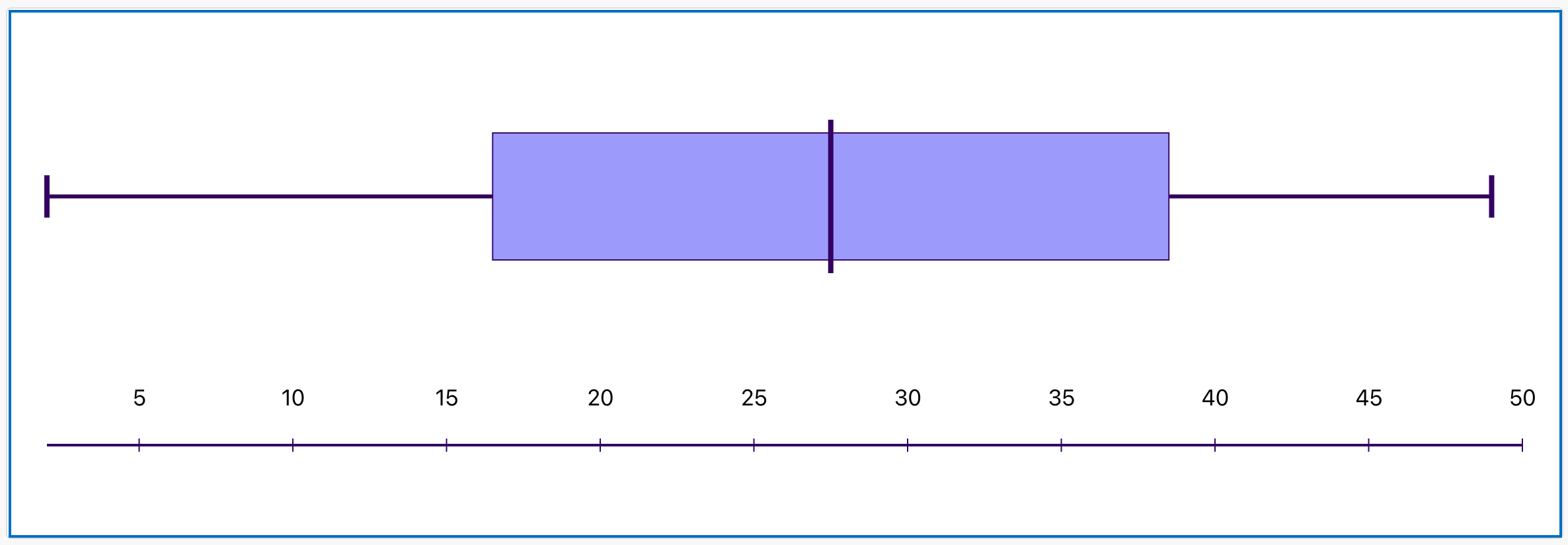
The last question I worked on involved a kind of graph I had never seen before. Yes, you read that right. I had never, ever seen this before. If this had been a multiple choice question, I would have eliminated answer choices in a systematic fashion picking the best one before moving on. But, this was open-ended, meaning I had to write out the answer, show all my thinking, and explain my reasoning.
Here’s where mindset comes in. I believe everything is figure-outable. I could have easily put down my pencil, gone back to check the answers on all the other problems, and just taken the point deduction for that question. Instead, I acted on my belief and I looked for connections to what I did know. And, you know what happened? I ended up with full credit on that question. I’m not saying every scenario will work out for you if you have a growth mindset…a belief that everything is figure-outable and that you can learn anything with time and effort…but I am saying that developing this kind of mindset will serve you much better than just giving up when things feel challenging.
Are you wondering what that question involved?
It was a box plot. Like the picture above. Box plots are one way to visually represent a data set. And data means statistics. That’s our first mathematical idea for today.
Statistics.
Most people I talk to either love statistics or they don’t.
I wonder which team you are on.
Statistics is the branch of mathematics that deals with data. All kinds of data. It even has ways to represent non-numerical data with numbers.
While you might not be calculating standard deviations or confidence intervals in your daily life, you are constantly collecting and analyzing data of all types. You track your habits, your water intake, and your steps. You know what kinds of foods your family likes and which to avoid. You make decisions about which route to take or what time to leave based on experience…data you’ve collected over time.
You look at weather forecasts and batting averages and interpret graphs and trends on your bank statements and fitness app.
All of these are within the realm of statistics and, whether you realize it or not, you interact with statistical ideas every single day. And that makes you a math person.
Shape
One of the first mathematical ideas you learned as a small child was to recognize shapes. Circles, squares, and triangles were probably among the first. Shapes are all around us and you notice them all the time, even if you aren’t really aware of it.
You intentionally give the trees and shrubs in your yard a certain shape. You recognize what shape container will work best in your cabinet or for that present you need to wrap. You recognize the shape of the defense when watching your favorite football, basketball, or soccer team.
You recognize and use shapes in all sorts of contexts every day. And that makes you a math person.
Sorting
Another idea you learned when you were young and that I’ve talked about several times here on the podcast, is sorting. Sorting means to group like things together. Like when you put the silverware away, separate the lights and darks when doing laundry, or when you count that cash you got for your birthday. Sorting involves comparison, another early math skill, and it is something you do on a regular basis. You know what’s coming next right?
Sorting anything makes you a math person.
Subtraction
Let’s talk about subtraction for a moment. When you were young, you might have learned it as take away.
Subtraction is the opposite of addition and I could argue they are the same operation since subtraction is really adding the opposite of a number.
When do you use the idea of subtraction? When making debits to your bank account, determining how much you have left in your grocery budget for this week, when thinking about how many points your team needs to pull off the win, and in countless other scenarios.
The next time you find yourself subtracting, take a moment to recognize you are interacting with a mathematical idea and remind yourself this makes you a math person.
Scale
Scale is a word beginning with S that has a couple of different meanings in the math world. You can use a scale to weigh something, like yourself, your child, or the produce at the market before you put it in your basket.
Scale as a verb means to enlarge or shrink by a certain ratio. So that model car or train set you have is a scaled version of the life size one. Each dimension has been adjusted based on a specific ratio. When you need to feed more people than a recipe makes, you double or triple it to make enough servings. You scale the recipe to make the amount you need.
I’m wondering where else you encounter this idea of scale in your life? I’d love to hear all about it!
I’m so grateful you joined the conversation today! I’m on a mission to change the way the world sees math, starting with you. If you found value in this post, if something you read made you pause, or if you suddenly realized the hidden math in something you do every day, now is the time to join the movement!
When you comment here and share this site, or when you subscribe to, rate, and share the I See Math People podcast, the algorithms will show it to more people and the more people who get the message, the more mindsets can begin to shift.
Thank you for being part of this discussion of a few of the mathematical concepts beginning with the letter S. I truly hope you heard something about statistics, shape, sorting, subtraction, and scale you can relate to and that it made you stop and think about where math shows up for you on a daily basis. Noticing where you interact with math is the first step to beginning your mindset shift and seeing yourself as the math person you really are.
I’m Jennifer Mason Hardin and everywhere I look I see math people just like you.