Did you catch my slip in the last post? When I let the cat out of the bag, so to speak? Yes, my next book…The Mathabet is the working title…will be available later this year. I know I should set myself a deadline, because that’s how these things get finished, but I haven’t yet. Since the book is kind of an expanded companion piece to season two of the podcast, and to this alphabet series here on the blog, I’m kind of writing them together.
I’d like to have this book launch in October…since that’s when Algebra is Not the Enemy launched last year, and you know I love a good pattern…but I’m hesitant to commit to that since we won’t be quite finished with the alphabet episodes yet. We’ll see. Just know it’s coming this year! I’ve been working on some ideas for the graphics and layout and I’m kind of excited about how it’s coming along. I can’t wait for you to get your hands on it!
{This is a modified transcript for Episode 40 of the I See Math People podcast. To listen instead, click here.}
Alright, my friend. Let’s keep this journey going by talking about some mathematical ideas you use on a regular basis that begin with the letter L.
When you think of mathematical ideas that begin with the letter L, what comes to mind?
Length
Is length on your list? You already know that the length of something is the distance from one end of it to the other, like the length of your couch. You also think about length in terms of time, as in the length of a movie or how long it will take to drive to your destination. You think about length in a variety of contexts…how long this meeting will last, is this table too long or not long enough for the space, or how in the world your child’s foot is already longer than yours. When did that happen?
For me, I had the shortest feet in my family when my youngest was in the 4th grade. He’s now 6’5” by the way!
You think about and interact with the idea of length on a regular basis and this most certainly makes you a math person.
Lines & Line Graphs
I’m wondering if lines or line graphs made your list of ideas that begin with L.
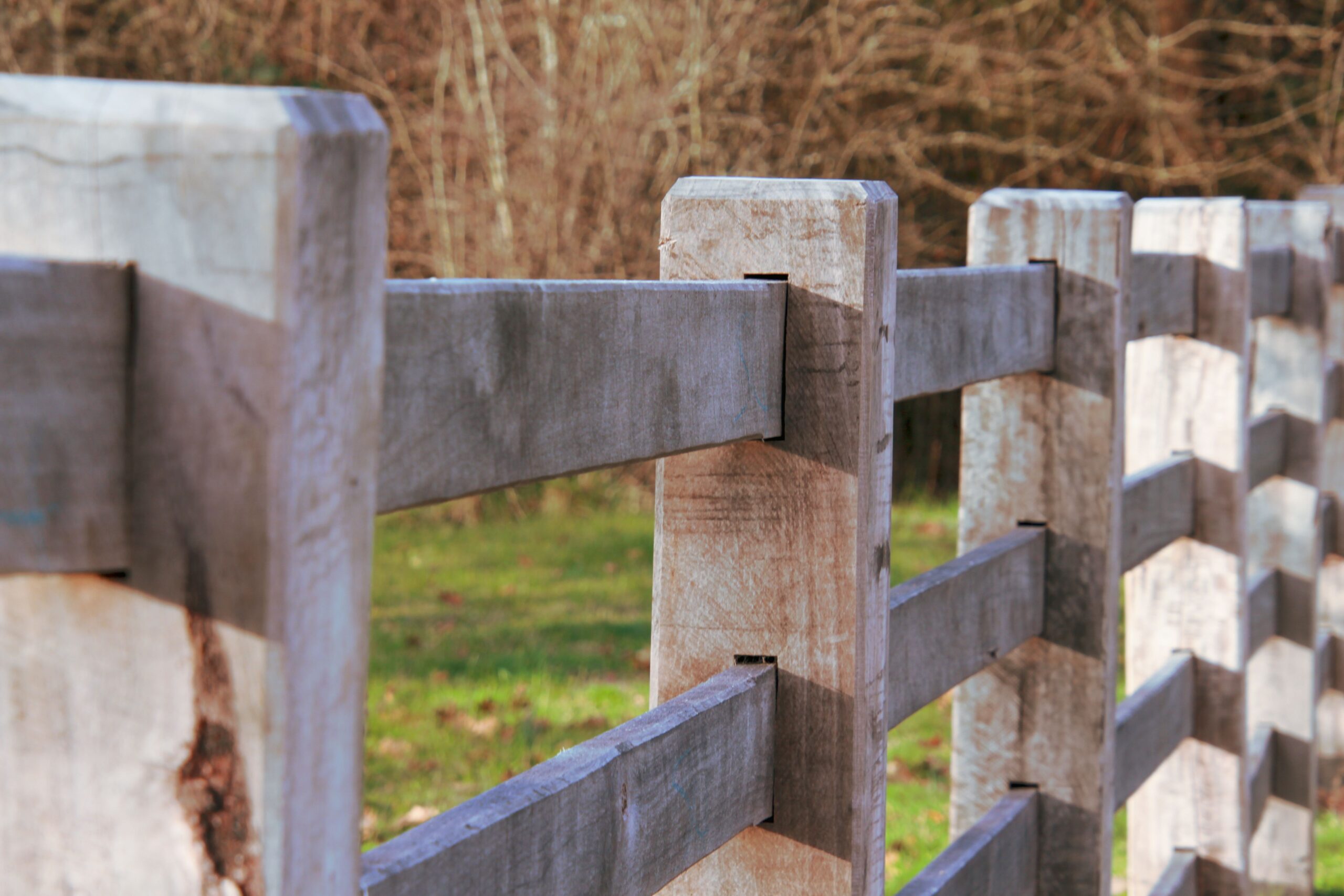
Lines form a boundary. In math class, those lines could be sides of a shape, forming a boundary between what’s inside and what’s outside. In real life this could be a fence around your yard or the railing on your deck. Usually, when we are talking about lines we mean a straight line, but we use lines to form all sorts of boundaries that usually aren’t straight. Things like property lines and county and state lines are a couple of examples.
In English, we even have sayings involving lines. Cross the line is one that comes to mind. I’ve heard this in both positive and negative contexts and they both involve moving past an invisible boundary.
Line graphs use straight line segments not necessarily as a boundary, but to connect points when tracking data so you can see the trends. You might encounter a line graph on your power bill or on a financial statement, showing your electricity usage or investment growth over time. If you use a fitness tracker, you also probably see a line graph when you look at your weekly activity for certain metrics.
Whether you are using or noticing lines as boundaries or to understand data in a graph or in any other kind of scenario, you are interacting with a mathematical idea. And you already know what this means, right?
You are a math person.
Logic
Logic is another idea that made my list. And it’s one idea that I know you interact with daily, whether you realize it or not.
Logic is a system of reasoning or thinking. It’s how you arrive at a decision and it’s how you solve problems of any kind, not just those involving numbers. Sure, you solve a math problem by reasoning through it in a logical manner, but more often than not in your daily life you are using logic to solve problems that don’t seem to involve math. Figuring out why your car won’t start or why your toilet doesn’t stop running or how to build a birdhouse with the scrap wood you have is problem solving.
You use logic to reason your way through that problem and that, my friend, makes you a math person.
I might also argue that this is the larger objective of learning math. How many times have you or your child asked “when will I ever use this” when learning a new, particularly challenging math skill or concept?
The truth is, not everyone will end up using every math concept they learn in their life or their career. But, everyone will need to be able to think critically and to problem solve on a daily basis, likely in both your personal life and your work life. In the last post we talked about key ideas and I would say this is definitely a key idea of mathematics learning. Not simply learning a concept for its own use or value, but being able to connect ideas to each other and think through them logically to arrive at a new level of understanding or at a solution to whatever you are facing. This is a skill that applies not only to math class, but to life in general.
So, if you are thinking through problems using logical thinking, and I know you are, you must be a math person.
Limits
Let’s talk about limits. If you sat through calculus class at any point, hearing me say that word might give you flashbacks.
You think about limits all the time, though. A limit is a kind of boundary, like the line we mentioned earlier.
It’s typically a value that can’t be exceeded. Like the absolute maximum you can afford for a car payment or the most amount of time you can allow for a meeting today. As humans we often try to exceed limits, like breaking the four minute mile, or setting a single season home run record. You even say phrases like “I’ve reached my limit,” referring to things like using your credit card or having patience with your child’s behavior. And of course, we encounter speed limits daily as we drive. Whether you are intentionally exceeding or staying close to that limit, you are still thinking about and responding to the idea.
No matter how you are interacting with limits as you go about your day, you are a math person.
Least/ Less than
The last thing on my list for today is something that I know you use all the time. It’s the idea of least or less than. Of course, you know least means the smallest, whether in value, quantity, size, length, or any other kind of measurement. And less than simply means one thing is smaller than another thing.
So, where does this idea show up for you? You’ve probably heard this before in other episodes, because there are some things you do that involve many different mathematical ideas.
Comparison shopping…meaning comparing prices at the grocery or the gas station, to name two scenarios…often means you are looking to pay the least amount for whatever it is you are buying. When you refinance your home you want an interest rate that is less than what you currently have. And sometimes, I’ve been known to travel to another city or state for certain purchases because they have a sales tax rate that is less than what I pay in my own town. Have you done this, too?
We also encounter this idea when we organize or arrange things based on height or width or thickness. Like stacking books on a shelf or hanging clothes in a closet by length.
Where else do you interact with this idea? I’d love to hear your thoughts in the comments or in my inbox.
It has been lovely to have you join the conversation today! I’m on a mission to change the way the world sees math, and that begins with you. If you found value in this post, if something you read made you pause, or if you suddenly realized the hidden math in something you do every day, now is the time to join this movement!
When you comment here and share this site, or when you subscribe to, rate, and share the I See Math People podcast, the algorithms will show it to more people and the more people who get the message, the more mindsets can begin to shift.
Thank you for being part of this discussion of a few of the mathematical concepts beginning with the letter L. I truly hope you read something about length, lines, logic, limits, and least that you can relate to and that it made you stop and think about where math shows up for you on a daily basis. Noticing where you interact with math is the first step to beginning your mindset shift and seeing yourself as the math person you really are.
I’m Jennifer Mason Hardin and everywhere I look I see math people just like you.