Can you believe we are already a third of the way through the alphabet? When I first had the idea to create a mathabet on the podcast (and include the discussion here on the blog), I had absolutely no idea what it would look like and how it would go. And here we are, already on the letter I.
Something funny I noticed as I was making some notes for this week is that all the terms we are thinking about today begin not just with “i” but with “in”. As in…inch, integer, interest, intersection, interval, increase, and inequality. I’m sure there are mathematical ideas beginning with I out there that don’t start with “in,” but they surely did not make my list this time. Maybe I’ll include them in the book 😉
Also, that’s a pretty long list for one post, so we won’t dive into all of those ideas today. I’ll stick to the ones you likely interact with most often. If you come across another one, or if you’d like to talk about something I don’t go into here, I’d love to hear all about it! Just send me an email or message me on Instagram.
Let’s get started with something I’m sure you are familiar with.
{This is a modified transcript for Episode 37 of the I See Math People podcast. To listen instead, click here.}
Inch
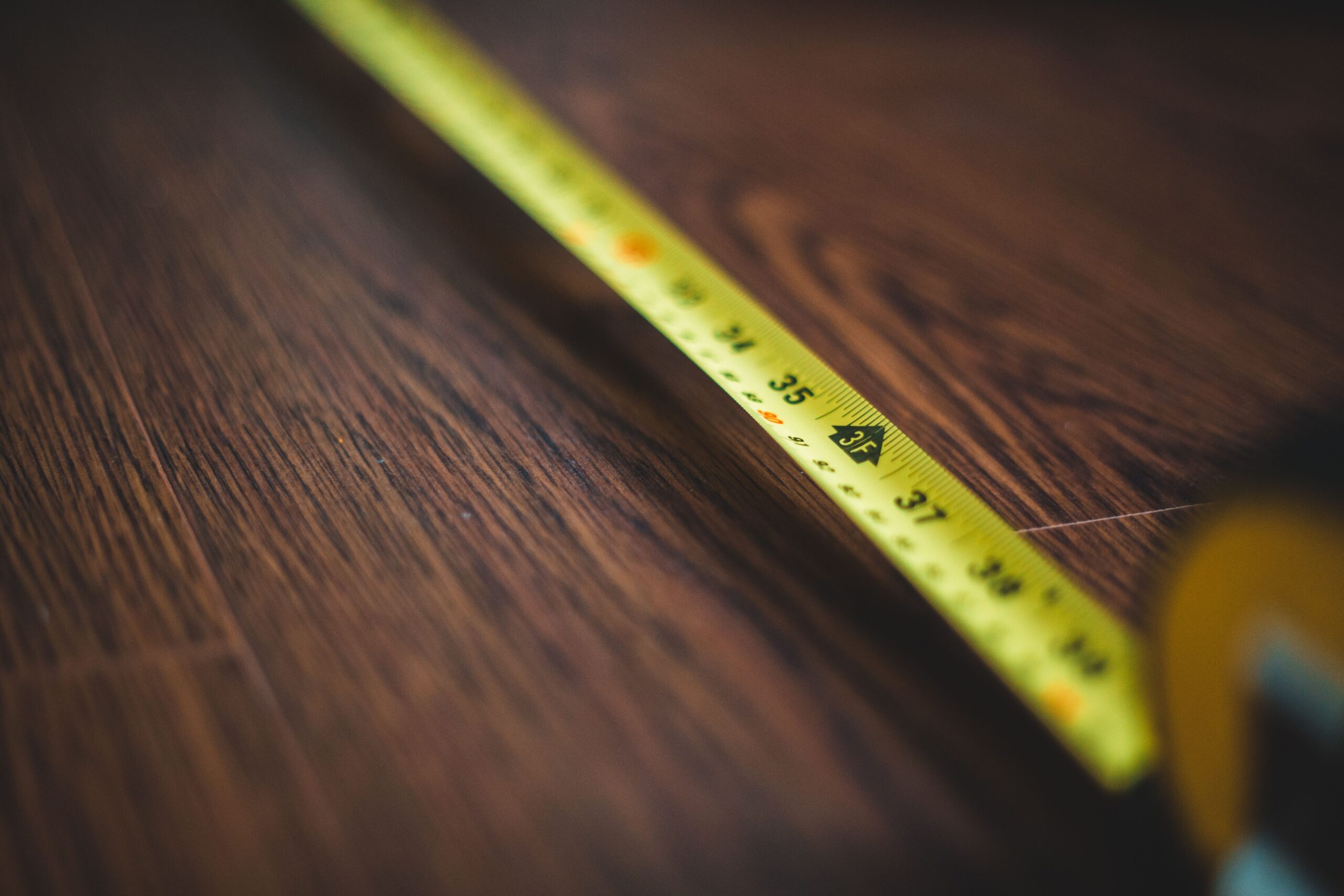
As you know, an inch is a standard unit of measurement. Standard meaning not metric. It’s interesting to me that in America we use a different measurement system than most of the rest of the world, but that is a discussion for another day. An inch is equal to 1/12 of a foot, so that means there are 12 inches in a foot, which may or may not be the actual length of your foot. But you already knew all that.
When you use a ruler or a tape measure to determine the length or height of something, you are working with inches or with feet and inches. Most given dimensions of things like cabinets, furniture, and even paper and photo sizes, like 8.5 x 11 and 3 x 5 are given in inches. When our children are born, we are told how long they are…in inches.
In English, we even have expressions like “give them an inch and they take a mile,” “inch by inch,” and “within an inch of,” meaning we came so close to whatever it is we are talking about. So saying these, or similar phrases, and understanding what is meant when you hear or read them is interacting with a mathematical idea.
I know you see and deal with inches in some way or another fairly regularly, which means you have to be a math person.
Interest
I is also for interest. Interest has a few different meanings, and the one that is related to math has to do with money.
When you deposit money in your savings account, for example, that money accrues a percentage of the balance as a “payment” of sorts for allowing the bank to hold onto your money. This extra money added to your account each month is called the interest and is considered part of your income, another I word, for tax purposes. It works the other way, too. When you borrow money from a bank, you pay it back with interest, the fee the bank charges for allowing you to use the money. The percentage varies depending on the kind of account or loan you have and this percentage is called the interest rate.
I do not know very many adults who do not interact with interest and interest rates in some way shape or form. If you have a savings account, an investment account (there’s another I word), a credit card, or a mortgage or car loan, you definitely encounter interest and interest rates, at the very least at tax time. It’s also probably a factor when you are looking for a new car or a new home or a new card because you want to pay the least amount of interest on your purchase.
So, of course I’m going to say it. If you think about interest in any way, you are a math person.
Intersection
Did you know the idea of an intersection is related to math? An intersection is where two things meet or overlap or cross. At some point in math class, you probably had to determine where two lines on a graph intersect, but where you see this most often is when driving. When two roads or streets cross each other, we call that an intersection. So, when you stop at the end of your driveway or slow down to make sure someone isn’t approaching from another direction before you pull into the road, you are being aware of an intersection. And, when you give directions and tell someone to meet you at the corner of 3rd and Main, you are referring to where those streets come together and intersect.
We also often talk about how ideas intersect. This season of the podcast (and this series of posts), for example, is the intersection of math and the alphabet and we sometimes refer to innovation as being at the crossroads of whatever came together to create it. Crossroads is just another name for intersection.
If you are noticing intersections anywhere, whether they seem related to math or not, you are using the math portion of your brain and that makes you a math person.
Increase
Okay. Now for one more mathematical idea beginning with I that I am sure you think about often. I’m talking about increase. When we talk about an increase, we are referring to getting more of something.
But you already know that.
Our homes can increase in value. We often want our income to increase. We hear about an increase in crime, in interest rates, in prices…which is related to another I word, inflation. Some of us want to increase our efficiency at work, our grade point average, the amount of weight we can lift, the miles we can drive on a gallon of gas, or the time we spend with family or doing something we enjoy. Anytime you are wanting or getting more of something, you are interacting with the idea of increase.
At first glance, this may not seem like it has to do with math. It’s one of those concepts you understand so well that you don’t even realize you are using it. When that happens, you cannot deny you are a math person.
I’m so glad you joined the conversation today! I’m on a mission to change the way the world sees math, and that begins with you. If you found value in this post, if something you read made you pause, or if you suddenly realized the hidden math in something you do every day, now is the time to join the movement!
When you comment here, share a post or subscribe to, rate, and share the I See Math People podcast, more people will see it and the more people who get the message, the more mindsets can begin to shift. That, my friend, is how movements gain momentum.
Thank you for being part of this discussion of a few of the mathematical concepts beginning with the letter I. I truly hope you heard something about inches, interest, intersection, and increase you can relate to and that it makes you stop and think about where math shows up for you on a daily basis. This awareness of where you interact with math is the first step to shifting your mindset and seeing yourself as the math person you really are.
I’m Jennifer Mason Hardin and everywhere I look I see math people just like you.