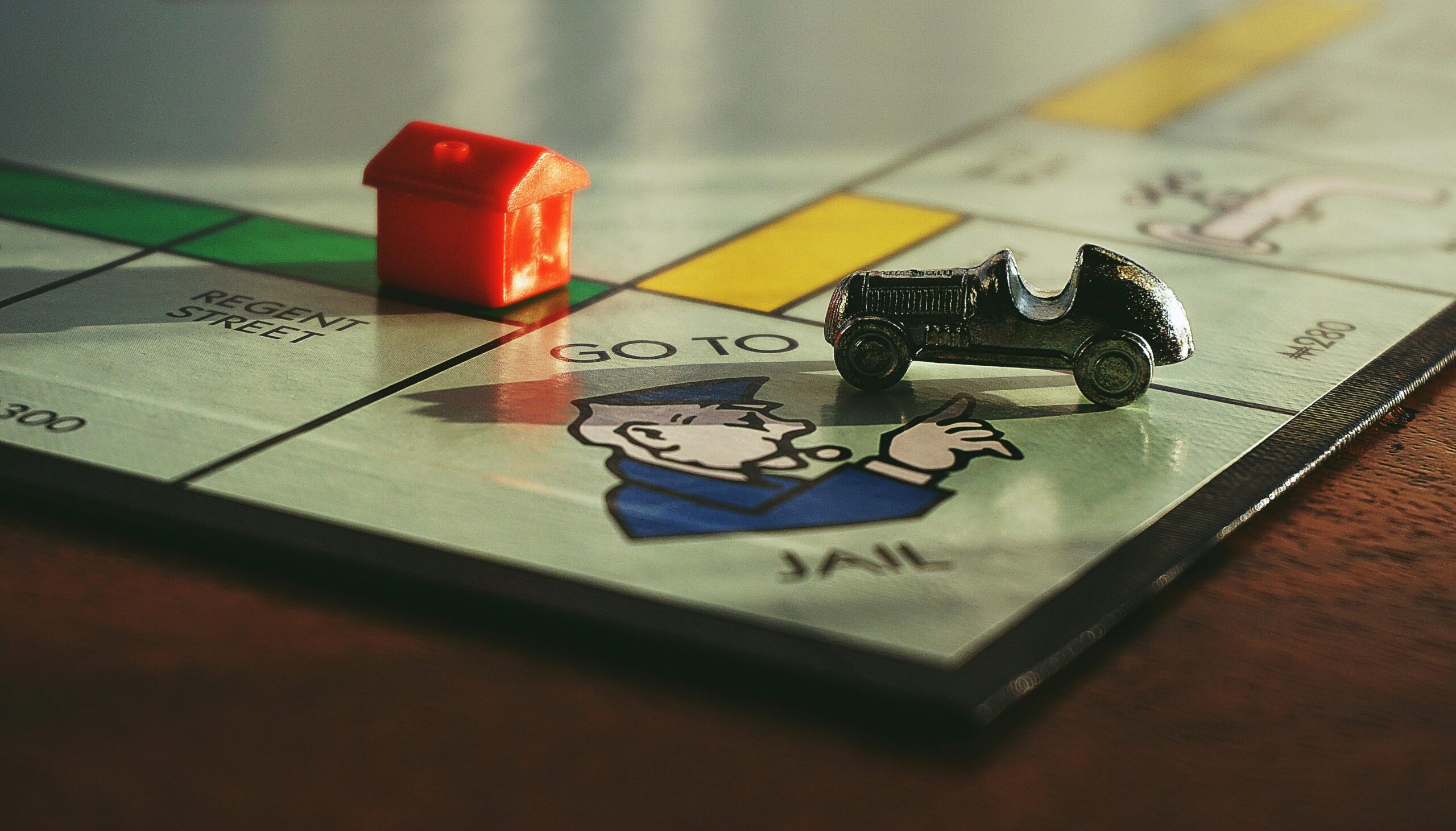
Do you love to play board games or card games like I do? I am always asking my husband if he wants to play a game and I love all kinds. I especially like games that involve some kind of strategy or skill. The truth is, though, most games involve some kind of mathematical thinking, so the message in this episode is if you play games, you are already using your math brain.
For some games, the math connection is obvious. Let’s look at a few examples: In a game of chance, like Yahtzee or poker, there’s probability and statistics at work. Monopoly requires managing money, counting spaces, making decisions. That’s all math. Keeping track of points in games like Scrabble requires counting and adding. Even a simple game like Candyland or Go Fish involves pattern recognition and matching. That’s math, too. And nearly all games involve following directions and turn taking.
You might be wondering, though, how thinking strategically, especially while playing a game, relates to math. Strategy just means thinking ahead, planning your options, and trying to make the best choice to help you win. Ever paused before a move and thought, ‘What should I do next?’ That’s strategy—and that’s math thinking. So, how does all of that relate to math?
Remember when I said it all comes back to patterns? In case you missed that discussion, check out Math in One Word. Back to the idea of patterns…When we play games involving strategy, we look for patterns in the moves our opponents make. In chess, maybe the other player keeps moving pieces toward your queen—that’s a pattern. In Uno, maybe you’ve noticed someone never plays blue—that’s a clue they might not have any blue cards. These patterns help you decide what to do next. That’s strategy—and it’s also mathematical thinking. Watch closely the next time you play a game and see what patterns you notice. That’s using math.
Strategy often uses ‘if-then’ thinking—just like math. For example, if you move your knight in chess, then your opponent might have to respond by moving their bishop. Or in Uno, if you play a blue card, then the next player might have to draw—especially if they don’t have any blue. That’s cause and effect. You’re thinking through possibilities, weighing risks, and deciding which move gives you the best chance of winning. That’s logic, and it’s deeply connected to math.
No matter what game you are playing, chances are you are thinking ahead…anticipating moves and how you will respond, looking for patterns in your own play and in the moves your friends are making, managing the resources you have, trying to make the most of the hand you were dealt, so to speak. You are also likely learning from your mistakes so you can adjust your play next time, in the hopes of getting a better outcome. So, you probably know what I’m about to say. The next time you play a game—whether it’s chess, Uno, or something else—notice how your brain is working. You’re looking ahead, spotting patterns, thinking through possibilities. That’s strategy, and it’s also math. You’re not just playing—you’re practicing powerful thinking using your math brain. So go ahead and celebrate it. You are a math person.
Taking that moment to remind yourself you are using math provides proof to your brain that you are a math person. Doing that one time is not going to be enough to change your mindset, but I promise if you make it a habit to keep finding evidence of mathematical thinking in your daily life, you will begin to shift your beliefs. You will begin to see yourself as the math person you really are. Remember, we aren’t just talking about math class. Like reading, math is a useful tool that helps us navigate the day and it’s present in everything we do.
I want to hear what you think. What games do you like to play that require you to think mathematically…to use strategy or logic or counting or patterns or…another skill related to math? Are you wondering what role math plays in your favorite game? Send me your thoughts and questions by commenting on an blog post, on an Instagram post or in an ******@************pi.com“>email. If you prefer to hear this content, check out the podcast I See Math People.
I can’t wait to hear from you!