I have only a couple of real memories from when I was in kindergarten. One of them happened at lunchtime. I had my little lunch box in my hands and I was standing in the line waiting to get my milk carton. Except, I must have been energetic that day. I don’t remember what I was doing, but I do remember the principal coming over to me and leading me to the middle of the cafeteria. She told me if I wanted to dance I could do it right there where everyone could see me. Then she walked away, leaving me all alone thinking all eyes were on me.
I remember being so embarrassed. I stood very still holding my little lunch box and eventually, I guess, I was allowed to get my milk and join my classmates to eat lunch.
The funny thing is, and maybe it isn’t so funny, I’ve been self conscious of my own dancing ever since. While I would create pretend ice skating and gymnastics routines all the time in the privacy of my room, I never asked my parents for dance lessons…my little sister did that and so did many of my friends…and other than slow dancing, which is just standing in one spot and swaying back and forth, and a few times going country line dancing in college…with its easy to learn patterns of steps that everyone does at the same time…I still haven’t danced much and I really don’t care for it as an activity for myself.
I do enjoy watching other people dance, and even though I claim dancing is not my thing (yes, I realize this is somewhat of a fixed mindset), I do see and appreciate the math in it. If you are a dancer of any kind, I’m gonna say that makes you a math person.
But how?
The first thing that comes to my mind is choreography. They don’t call it a dance routine for nothing, right? And what is a routine? It’s a repeated pattern. In this case, a pattern of movement. Maybe you are a ballet dancer, like my college calculus professor who turned down a position at Columbia so he could dance professionally…yes, that’s a true story. Or maybe tap, jazz, ballroom, or shag is more your style. It doesn’t matter what kind of dance you perform, dancing involves specific movements performed in specific ways. When you practice these routines, you are creating patterns with your body and since patterns are math, this means you are using the math part of your brain and, to me, that makes you a math person.
But there has to be something else involved in dancing, right? Of course, there’s more. Typically, some sort of music is involved when we dance and the movements we make often correspond to the rhythm or the melody of the music. So, if you are line dancing the Electric Slide or the Boot Scootin’ Boogie, your steps keep with the beat of the music. Yes, I know I dated myself right there. I’m okay with that. If you are a ballet dancer, maybe your body flows more with the melody than with the beat. The same kind of thing applies to any other kind of dance, too, though. Your steps and movements, the way you use your body while dancing, matches the beat or flow of the music that accompanies you. This matching of the music and keeping with the beat requires you to use the math portion of your brain. So this is another connection between dancing and being a math person.
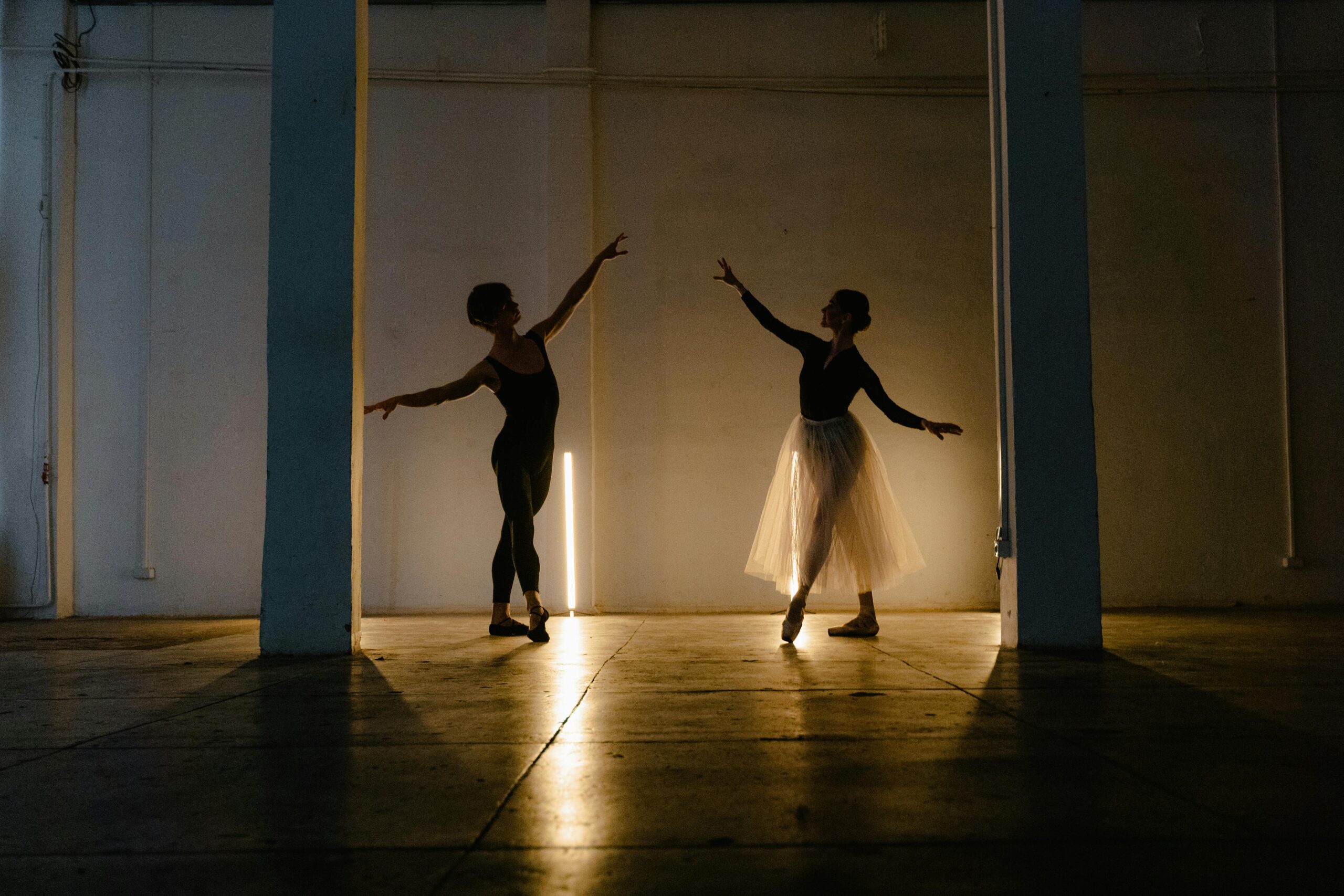
I bet you aren’t surprised a bit when I say there’s even more to it. Are you familiar with the idea of symmetry? The way butterfly wings are reflections of each other is one example of symmetry. When you dance with a partner, many times the movements the two of you make mirror each other. Something similar applies when you are dancing in a group. Think about dance recitals where the class performs together or a dance team at a sporting event. Sometimes the arrangement of the dancers in the group itself is symmetrical and also the choreography might have the movements be symmetrical as well.
Then there’s spatial awareness. Understanding where your body is in relation to other dancers or to the stage or the floor you are performing on. Dancers often think about the shape their bodies make when they move…lines, angles, curves. And the path of your dance is part of this, too. Do your steps form a circle? Are you moving in a straight line or on a diagonal? Spatial awareness and the shapes we form are definitely connected to mathematical ideas, so when you are keeping track of your movement and where you are in relation to the space or to other people, you are thinking mathematically.
What if you are more of a freestyle dancer than someone who relies on a choreographed routine? This all still applies to you, too. You keep time with and respond to the music you are dancing to. You move in specific ways to create certain shapes both with your body and with the path you move in. You are still interacting with mathematical ideas as you dance.
So, here’s my claim for today. No matter the style of dance or the type of music you dance to, if you dance, you are a math person. Don’t believe me? The next time you find yourself dancing, think for just a minute about what you are doing. What you are thinking about when you are moving to the music. Are you following a set of memorized steps? Are you creating certain shapes with your body or with your path across the dance floor? Are you mirroring a partner? Are you keeping time with the beat or responding to the melody? If the answer to any of these questions is yes, then you, my friend, are using a mathematical idea when you dance and that makes you a math person.