Can you believe we are already on the seventh letter of the alphabet? I know. It seems weird for a math blog to be talking about the alphabet, but I got this idea a few months ago when I was clearing out some things in my home office and ran across a math alphabet book I kept on my classroom bookshelf for my students to read. That book was called G is for Googol.
{Fun Fact: googol, spelled g-o-o-g-o-l, is the name for the number that equals ten to the power of 100. If you were to write this out, you’d write a 1 followed by 100 zeros.}
The book talks about some pretty interesting math ideas, some of which you probably haven’t heard of before. Like the number googol, for example. Instead of talking about random math ideas here on the blog, I wanted my version of a math alphabet book to include ideas you are familiar with and that you probably use pretty frequently.
All for the purpose of showing you that math people are everywhere. And that you are one of them, whether you choose to believe it or not.
So, how about we get on with it by chatting about some mathematical ideas beginning with the letter G.
Let’s begin with a couple of words that are closely related…
{This is a modified transcript of Episode 35 of the I See Math People podcast. To listen instead, click here.}
Graphs and Grids.
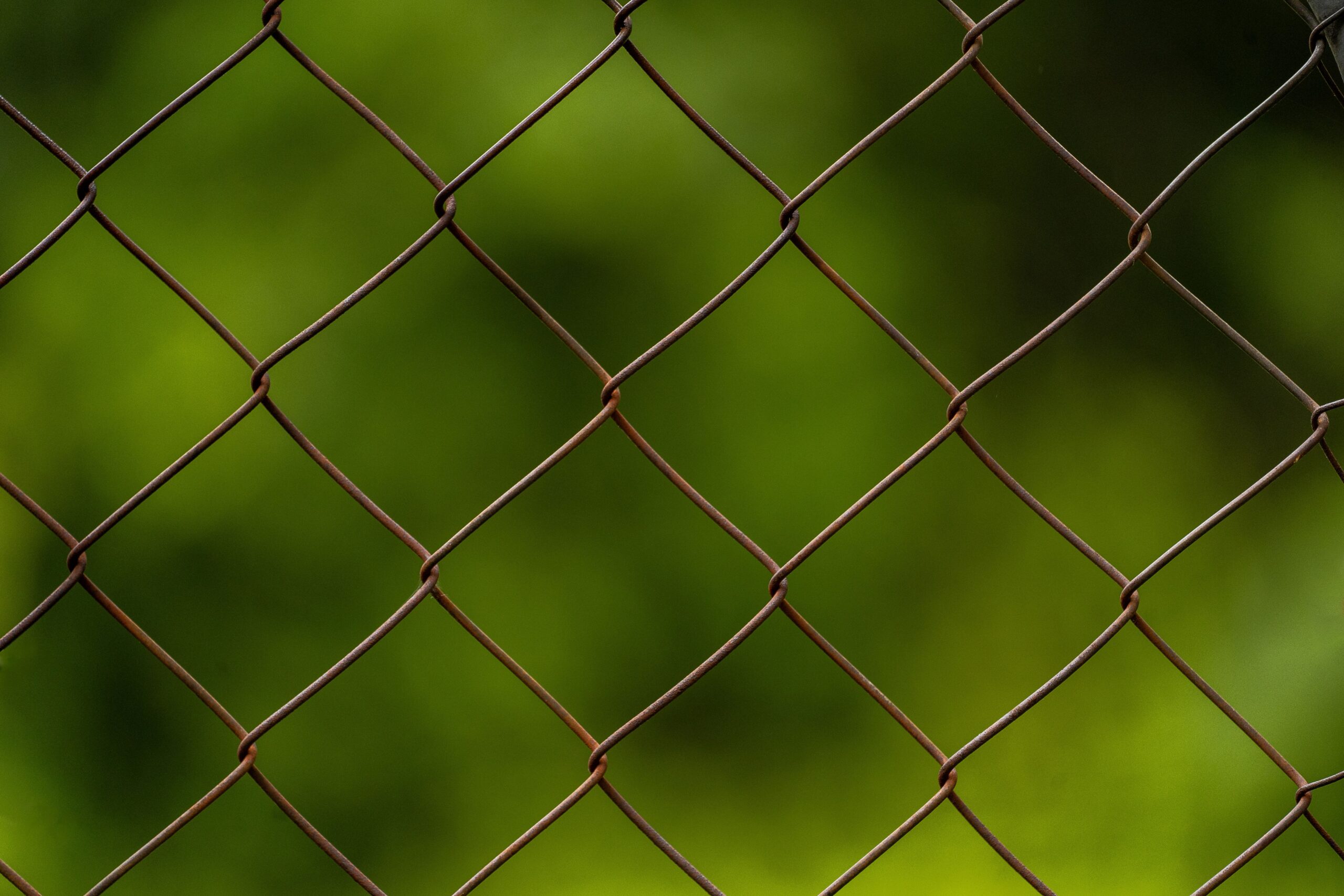
I’m sure you are already familiar with the idea of a grid being a network of parallel and perpendicular lines that create squares, usually of equal size. I guess a grid could create other shapes, like parallelograms or rectangles, but when we think of a grid we are typically referring to squares.
Where have you seen grids?
Maybe you use grid paper to layout a design for a room or a garden. Maybe you line up stakes in a grid pattern when you plant tomatoes in that garden. Or maybe you’ve noticed streets create a grid of city blocks. Remember when you were a kid and you were trying to practice your drawing skills? You might have created a grid over the image you wanted to draw and used that as a reference as you made your own copy. Calendars are often a grid and you probably use one every day.
Grid paper is often also called graph paper, because you can use it to draw graphs that are more accurate than free hand. A graph is a visual representation of information. Graphs come in many shapes and varieties, though, and not all of them require a grid. There are bar graphs, line graphs, and pie charts, just to name a few. You probably encounter some kind of graph more often than you realize. Weather reports, fitness trackers, opinion polls, and financial statements all frequently represent information using graphs. If you are reading and interpreting graphs like these, you are definitely a math person.
What other mathematical ideas begin with G? How about geometry?
Geometry
Geometry is the branch of mathematics that deals with shapes. You might not be studying shapes on a regular basis, but if you notice the shapes around you, you are thinking with geometric knowledge. When you are organizing your pantry and you notice rectangular baskets work better than another shape, that’s geometry. Or when you are playing mini golf or pool and you try to make your ball come off the rail at a certain angle, that’s also geometry. When you are building a structure with toy blocks or with 2x4s, you use geometry to create shapes that will support whatever you are building.
You also use your geometry knowledge when you are deciding how much flooring to get for that bathroom makeover or how much fencing is needed to give your dog a safe space to stay in your yard. These tasks involve finding the area or perimeter of a space.
If you do any of these things, you are a math person.
Growth & Greater Than
Growth is another mathematical idea beginning with G. Growth can take many forms and as humans we like to track all of them. From growing plants, to growing bank accounts, to tracking the heights of our growing children, growth is a concept we interact with all the time. We sometimes refer to it as progress, but how do we know things are growing? That’s usually because of another idea that begins with G…the idea of greater than.
We can see something is growing because the value of whatever we are measuring is greater than it was before.
You also use the idea of greater than when you are comparing prices at the grocery store or gas station or when you are making a decision about which washing machine to buy. You want to get the greatest value for your money, so you consider which features are important to you and which model provides the greatest value.
The ideas of growth and greater than are two I bet you think about and use all the time, often without being consciously aware you are doing so. When I think about what it takes to be a math person, that’s what stands out to me…if it’s so much a part of what you do that you don’t even realize you are doing it, you must be a math person.
I’m so glad you joined the conversation today! I’m on a mission to change the way the world sees math, and that begins with you. If you found value in this post, if something you heard made you pause, or if you suddenly realized the hidden math in something you do every day, now is your chance to join the movement!
How can you help? When you comment here and share a post or when you subscribe to, rate, and share the I See Math People podcast, more people will see it and the more people who get the message, the more mindsets can begin to shift.
That, my friend, is how movements gain momentum.
Thank you for being part of this discussion of a few mathematical concepts beginning with the letter G. I truly hope you heard something about grids, graphs, geometry, growth and greater than that you can relate to and that it made you stop and think about where math shows up for you on a daily basis. Noticing where you interact with math is the first step toward beginning your mindset shift and seeing yourself as the math person you really are.
I’m Jennifer Mason Hardin and everywhere I look I see math people just like you.