If you are a faithful reader (or podcast listener), I hope you are enjoying this trip through the alphabet, mathematics style.
If you are new here, welcome! I’m so glad you found my corner of the internet and I hope you read something here that makes you pause and get curious about your beliefs around math.
- Are they really your beliefs?
- Is there a moment you can recall when those beliefs started to take root and change the way you see yourself?
- Have these beliefs about math influenced your decisions in life?
You know I like to ask questions and that I’m curious about everything. It’s the way I approach the world. So, those are just a few things to think about as we head into our time together exploring a few mathematical ideas that begin with the letter F.
The first one on my list today is everyone’s favorite. It might even be the first thing that popped into your head when you were thinking of math and the letter F.
{This is a modified transcript of Episode 34 of the I See Math People podcast. To listen instead, click here.}
Fractions
There are two kinds of people in the world. Those who think fractions are fun and those who try to avoid them at all costs. I can hear the groans and feel the eye rolls and we aren’t even in the same room right now.
I have probably spent more time trying to convince people to make friends with fractions than I have talking about any other mathematical concept. That’s because when you really understand how they work and what they represent, fractions make many problems so much simpler to tackle. The challenge I’ve seen most often when working with students of all ages isn’t really about fractions. It’s about a shaky understanding of multiplication and division, which is where the magic of a fraction really lies.
So, what is a fraction? A fraction usually represents a piece of something, like ¼ of a pizza, and is written as numbers above and below a fraction bar. Here’s the thing many people miss…that fraction bar means division, so that ¼ of a pizza I mentioned where ¼ is often referred to as “1 over 4” is really symbolic language for 1 divided by 4.
Enter 1 divided by 4 in your calculator and I bet you already know what you’ll get…the decimal representation of the fraction ¼.
I love how fractions work so much, I’m tempted to just launch into a little lesson here and I have to remind myself that’s not the purpose of this post. So, if you want to explore this idea a little deeper, please reach out. You can comment on this post, send me an email (je******@************pi.com), or find me on Instagram to ask your questions.
The actual purpose of this blog series is to show you where you encounter mathematical ideas out in the real world. Unless this is your first time here, some of what I’m about to say might sound repetitive, but that’s just because these things we do every day involve a lot of different mathematical concepts.
When you cook or bake using recipes, you absolutely work with fractions as you measure ingredients. I’m sure you’ve shared food or other items with friends or family, too, and you’ve wanted to make sure everyone gets the same amount. You might think that’s division…and it is…but remember what I said about fractions? They are division. So you’ve also used fractional thinking when you’ve shared in this way.
When you use a tape measure, a yard stick, or a ruler, you almost certainly encounter fractions.
Have you ever referred to the time as “half past” or “quarter til”? These phrases represent fractions of an hour.
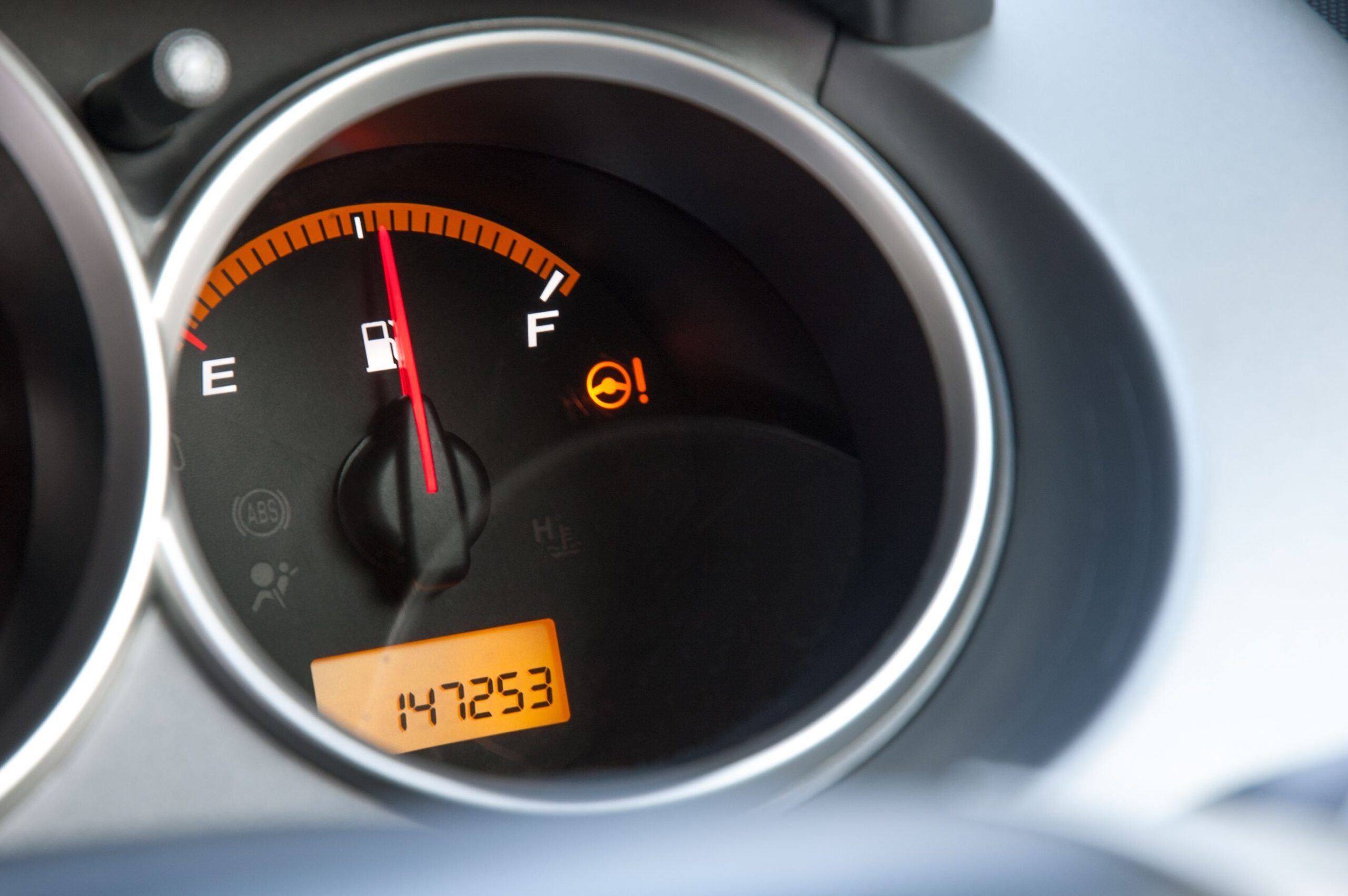
I bet you’ve looked at the gas gauge in your car and thought to yourself, “half a tank is plenty for this trip.” That’s thinking in fractions.
When you see something is buy one get one free at the grocery store and you understand that means it’s really half price, or when you’re shopping the clearance rack at your favorite clothing store and you know 75% off means you pay ¼ of the price, you are using fractions.
Do you play a musical instrument? Time signatures are fractional relationships and notes represent a fraction of a measure.
Maybe you track sports statistics. When a basketball player is 2 for 4 from the three point line or when a baseball player is 1 for 3 at the plate, those stats represent fractions.
Fractions are pretty much everywhere and you use this idea way more than you realize, even when you aren’t consciously thinking about them. In my book, that makes you a math person.
Factors
Factor is another mathematical term that begins with F and it’s closely related to fractions. That’s because when we work with fractions, we often need to understand factors. Remember when I said if you find fractions challenging, you might check your understanding of multiplication and division? In math, factors are numbers that multiply together to make another number, the product.
For example, in 3 x 2 = 6, 3 and 2 are the factors and 6 is the product. We can also think about this from the division angle. A factor will divide a number evenly and the result will be another factor. When we say 6 divided by 2 is 3, we’ve also shown that 2 and 3 are factors of 6. It works both ways.
When you operate with fractions, meaning add, subtract, multiply, and divide, you often have to think about factors to get the job done. I’m not saying you operate with fractions daily…you might…but I am saying anytime you think about multiplication or division, you are using the idea of factors. We’ve already talked about shopping and sharing as examples of fractions and these tasks also often involve using factors as well.
The idea of factors also shows up in ways that don’t seem mathematical. When you factor in time, cost, distance, convenience, or any number of things into a decision you are making, you are considering how those things impact the outcome and evaluating which outcome is best for your situation. So, even if the factors in your decision don’t seem to have a connection to math, the process of weighing their importance to make your decision requires using the math portion of your brain. We all make many decisions in a day, based on any number of factors, so this is one area where you are almost constantly using your math skills.
You know what I’m going to say next, I bet. This makes you a math person.
Formulas
F is for fraction and factor and it’s also for formula. When you hear that word, it might bring on a sense of dread that nearly matches how you feel about fractions, but I promise you, formulas play a part in your life almost daily.
You might remember some of the math formulas you learned about in math class. The pythagorean theorem, for example, is represented by a formula used to find missing side lengths in right triangles…does a2 + b2 = c2 squared ring a bell? Or you might hear the word area and automatically think of length times width.
{Side note here, using length times width to find area really only applies to one kind of shape, but is often the only formula students try to use when solving area problems.}
Math formulas represent relationships between certain elements of a problem and I couldn’t even begin to guess the number of formulas we are asked to use in math classes. It’s a lot. And many of them don’t really apply in your day to day life.
When you understand that a formula is really just a repeatable plan or set of instructions for doing something, you start to notice how often you interact with them.
A formula is a recipe, if you will. So, obviously, if you are cooking or baking, you use a formula to prepare that casserole or birthday cake. Anytime you follow a set of instructions…for resetting your password or navigating to your destination…you are using a formula designed to get you there. We even have phrases like “formula for success” for when someone is sharing how they accomplished something. The idea is that you follow what they did to find your own success.
Fibonacci Numbers
I really want to share one more idea with you, even though it probably isn’t something you ever think about. Fibonacci numbers, the numbers in what is known as the Fibonacci sequence that begins 1, 1, 2, 3, 5, 8, 13, 21…might not be something you think about all the time, but these numbers and the ratios between them are found everywhere, especially in nature and design. This is one topic I get really excited about, so I dedicated an entire post (and podcast episode) to it. It’s called Math is Nature: Part 1 and you can find it easily on the podcast by looking for Episode 19.
I encourage you to check it out and let me know where you notice Fibonacci numbers or ratios in your environment.
I’m so glad you joined the conversation today! I’m on a mission to change the way the world sees math, and that kind of begins with you. If you found value in this post, if something you heard made you pause, or if you suddenly realized the hidden math in something you do every day, now is your chance to join the movement!
How can you help? When you comment here and share a post or when you subscribe to, rate, and share the I See Math People podcast, more people will see it and the more people who get the message, the more mindsets can begin to shift.
That, my friend, is how movements gain momentum.
Thank you for being part of this discussion of a few mathematical concepts beginning with the letter F. I truly hope you heard something about fractions, factors, and formulas you can relate to and that it made you stop and think about where math shows up for you on a daily basis. Noticing where you interact with math is the first step toward beginning your mindset shift and seeing yourself as the math person you really are.
I’m Jennifer Mason Hardin and everywhere I look I see math people just like you.