This post is brought to you by the letter B.
If you are new around here, I recently came across a math alphabet book I had on my middle school classroom book shelf and decided this idea would be fun for the podcast…and here on the blog…so in each episode this season I’m talking about a few math ideas that begin with the same letter. Last week, I shared how ideas like addition, area, angles, and averages show up in your daily life, even in situations where you might not make the connection to math. You can read that post here or listen to the episode here. Today we are talking about a few ideas that begin with B.
Are you already building a list you think I might include?
{This is a modified transcript of Episode 30 of the I See Math People podcast. To listen instead, click here.}
Balance
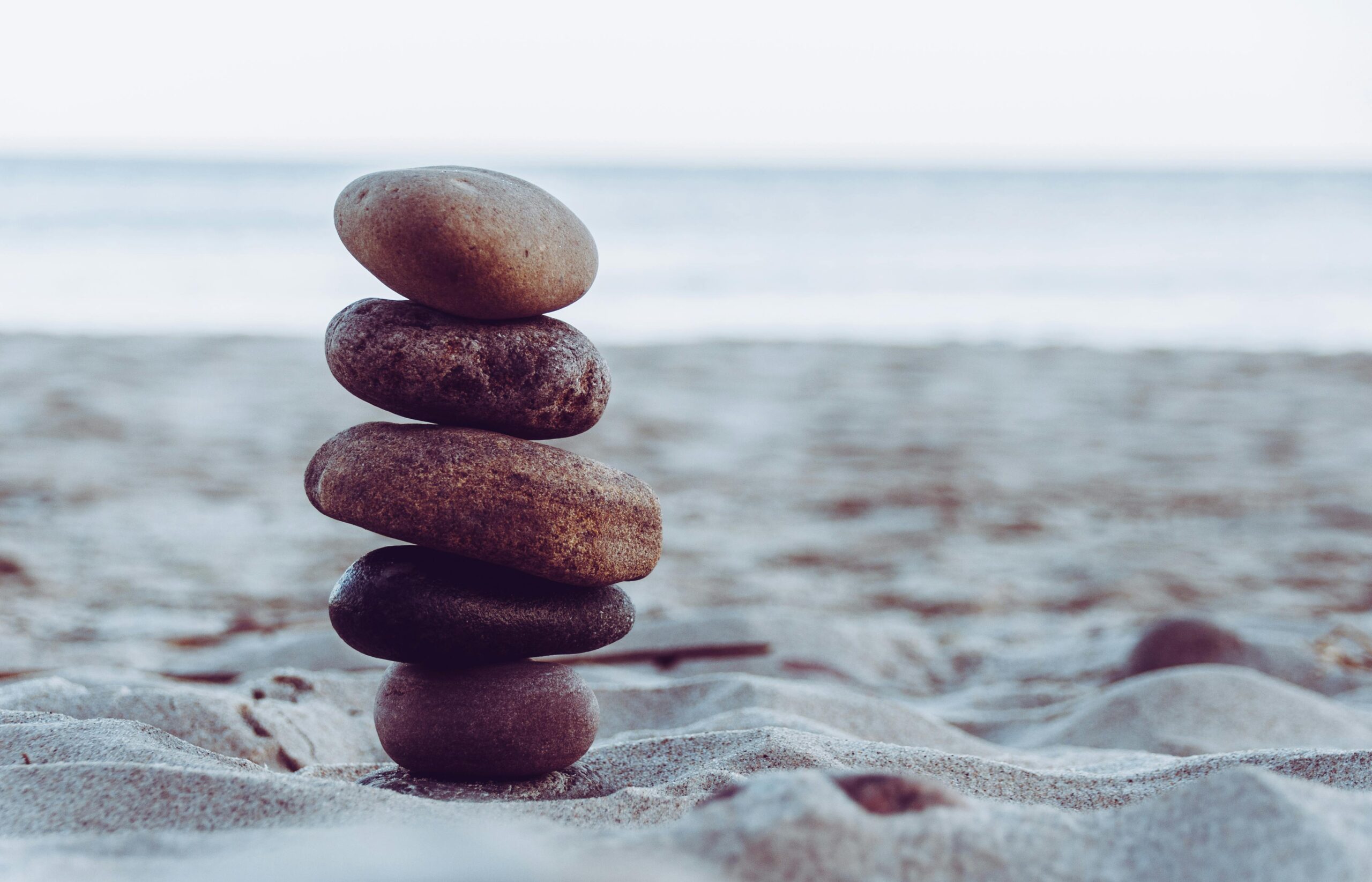
I wonder if the word “balance” is on your list. For something to be balanced means that it’s equal on each side and that it won’t tip or fall over. So if you or your child have ever walked a line or a curb like a balance beam, you’ve been using this concept. Here, you are adjusting your center of mass so you don’t fall off. Balancing yourself like this is one of those things you do intuitively and by feel, so I’m guessing you’ve never really thought of the math involved. I suppose some of you might argue this is more physics than math…and I might give you that point…but math is used to describe physics, so I stand by the presence of math in this context.
In math class, I bet you balanced equations as you solved them (meaning you did the same thing to both sides at each step), and I bet you think you don’t do this as an adult. If you have a personal budget and you keep track of money that comes in and goes out, this is similar to balancing an equation. You want to make sure your expenses are less than your income and that the “balance” in your account stays positive and matches what you have in your records.
Does anyone even balance a checkbook anymore?
You also see the word balance on bills of all kinds. When your balance is zero, you’ve paid it in full. If it isn’t zero, you still owe. It’s called a “balance” because that’s the amount needed to make what you gave and what you received equal in value.
Let’s move away from numbers for a minute. Remember when I told you I’ve been redecorating a space in my home to use an office? When you are working with color and furniture in a space, the goal is often visual balance. Ever walk into a room and felt there was something off about the colors or the furniture placement? Maybe there wasn’t enough contrast between light and dark or maybe the colors didn’t complement each other well. Maybe the couch was too big for the space or the table was too small. The room just didn’t feel balanced.
How about that phrase “work – life balance.” What does that even mean? I usually hear this from people who spend most of their time working and don’t leave enough time in their lives for rest and connection to others. We want the energy we put out to balance with the energy that gets restored. We want balance between our work and our play.
These are just a few examples of how the concept of balance shows up in your life. If you can relate to any of them, that makes you a math person.
Budgeting
Earlier, I mentioned personal budgets as something we balance and I’d like to return to the idea of budgeting as the second mathematical idea that begins with B in this discussion.
Budgeting is managing a resource. Making sure you don’t use more than you have and that what you have lasts until you can get more. When you hear the word budget, you probably think of money. And, yes, money is a resource we manage. But did you realize there are other resources you manage as well? How about time, for example. Frequently, I hear people say they just don’t have enough time to do x, y, and z. We all get the same 24 hours in a day and have to manage that time to do the things we want and need to do. That’s budgeting.
Same with food. When my children were younger, I was pretty disciplined about meal planning and grocery shopping. I planned meals for an entire week (sometimes two at a time) and did the grocery shopping accordingly. There wasn’t much wiggle room in our finances at the time, so we had to be careful to not get too snack happy and make sure that the food we bought lasted until the next shopping trip. Does this sound familiar? Food is a resource to manage. That’s budgeting.
I bet you also budget your personal energy, attention, and emotional bandwidth on a daily basis…saying no to things you know might drain you so you have enough for the things you want or need to do.
While budgeting might not be a pure mathematical idea on its own, it sure does involve math. When you budget anything, you use addition, subtraction, estimation and problem solving skills, to name a few. So, no matter what resources you manage, or how aware you are that you are budgeting when you do, this concept is present in your life. And you know exactly what I’m going to say next, don’t you…that makes you a math person.
If you’d like to dive deeper into the math involved in budgets, you might enjoy this post or listening to Episode 22, Math is Money.
Bar Graphs
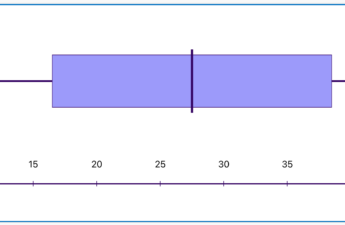
I almost didn’t include this next idea in the discussion because I thought it might be a little too specific. Ultimately, I decided to because it’s an example of something that’s so common it can be overlooked. I’m talking about bar graphs. When I say “bar graph” you might be taken back to math class and the seemingly endless questions asking you to read and interpret bar graphs about made up scenarios or asking you to create bar graphs based on data you collected or were given. Maybe you enjoyed that. Maybe you found it difficult or boring or useless.
The truth is we see bar graphs every day. Did hearing that make you wonder where?
How often do you check the daily temperatures? I see a bar graph on the weather app on my phone and if you watch the weather forecast on the news, you are probably looking at a bar graph. Do you use a fitness tracker to track steps or heart rate or any number of metrics? These results are often displayed using bar graphs. Same with the weekly usage your phone tracks to show how much time you spent scrolling social media or texting your friends. Opinion and political poll results are often shown using bar graphs…sometimes even double bar graphs to compare different demographics, like men vs women in specific age bands.
Here’s the point. Bar graphs are everywhere, and if you are using them for anything, you are a math person.
I’m so glad you joined the conversation today! I’m on a mission to change the way the world sees math, and that begins with you. If you found value in this post, if something you heard made you pause, or if you suddenly realized the hidden math in something you do every day, now is your chance to join the movement!
How can you help? When you subscribe to, rate, and share I See Math People or A Pocketful of Pi, more people will see it and the more people who get the message, the more mindsets can begin to shift.
That, my friend, is how movements gain momentum.
Thank you for being part of this discussion of a few of the mathematical concepts beginning with the letter B. I truly hope you heard something about balance, budget, and bar graphs you can relate to and that it made you stop and think about where math shows up for you on a daily basis. Noticing where you interact with math is the first step to shifting your mindset and seeing yourself as the math person you really are.
I’m Jennifer Mason Hardin and everywhere I look I see math people just like you.